The Complete Guide to Flat Commercial Roofing Systems in Northeast Indiana
The Complete Guide to Flat Commercial Roofing Systems in Northeast Indiana
Jul 14, 2025
Summary
Commercial flat roofing in Northeast Indiana faces an extreme mix of weather challenges—heavy snow, humidity, freeze–thaw cycles, summer heat, and rapid temperature swings. This guide covers the five major commercial flat roofing systems used locally (EPDM, TPO, PVC, Modified Bitumen, and coatings), explains their pros and cons, breaks down cost and lifespan expectations, and outlines the most common roofing problems seen throughout the region.
You’ll learn how each material performs, how Indiana’s weather impacts roof longevity, and how to determine whether a roof needs repairs or a full replacement. We’ll also cover drainage design, maintenance timelines, and key warning signs that often predict early roof failure. This blog serves as the foundation for all future niche roofing topics, giving building owners the information they need to make confident decisions about protecting their commercial property.
Common Flat Roofing Systems Used in Northeast Indiana
Commercial buildings in this region typically rely on one of five major roofing systems. Each has strengths suited to different building types and weather conditions. Understanding these systems helps property owners select the right long-term investment.
EPDM (rubber)
TPO (thermoplastic)
PVC
Modified Bitumen
Elastomeric / Silicone Coatings
These roofing materials may look similar from the ground, but their performance, durability, and cost vary widely. Below is a deeper look into how each one functions and where it performs best.
EPDM Roofing (Rubber Roofing)
EPDM is one of the most reliable systems for handling Northeast Indiana’s winter temperatures. Its rubber-like elasticity helps it expand and contract during harsh temperature swings without cracking or splitting.
EPDM membranes are typically installed in large sheets, reducing the number of seams and lowering the risk of future leaks. Because of its long-term durability and cost-effectiveness, EPDM remains a top choice for industrial and commercial facilities.
Pros
Handles cold and freezing temperatures extremely well
Long lifespan of 20–30 years
Affordable
Easy to repair with patches or adhesive
Fewer seams due to large sheet sizes
Cons
Absorbs heat due to its dark color
Adhesive seams can weaken over time
Less energy-efficient than reflective membranes
Best For
Large commercial buildings, warehouses, manufacturing facilities, and low-traffic rooftops.
TPO Roofing
TPO is a highly reflective, energy-efficient roofing system that is well-suited for Indiana’s humid summers. Its bright white surface helps reduce heat absorption, lowering energy bills and reducing strain on HVAC systems.
Because TPO quality can vary by manufacturer, choosing the right contractor is essential. High-quality TPO membranes perform exceptionally well; lower-quality options may not last as long.
Pros
Reflective white surface lowers cooling costs
Strong heat-welded seams
Lightweight and flexible
Competitive lifespan when installed properly
Cons
Manufacturer quality varies
Requires skilled heat-welding
Less durable if installed incorrectly
Best For
Retail centers, office buildings, healthcare facilities, and any property prioritizing energy savings.
PVC Roofing
PVC is considered one of the strongest single-ply roofing systems available. It offers superior chemical resistance, making it especially popular for restaurants and manufacturing facilities where grease, exhaust, or industrial byproducts reach the roof.
PVC’s heat-welded seams create some of the strongest waterproofing available in commercial roofing.
Pros
Excellent resistance to chemicals, grease, and oils
High fire resistance
Long lifespan (20–30 years)
Superior seam performance
Cons
Higher upfront cost
May shrink slightly with age if improperly installed
Best For
Restaurants, commercial kitchens, industrial buildings, and any facility with chemical exposure.
Modified Bitumen Roofing
Modified bitumen provides layered protection for commercial roofs, combining asphalt with reinforcing materials for added strength. This makes it ideal for buildings with higher roof traffic or older structures that need additional durability.
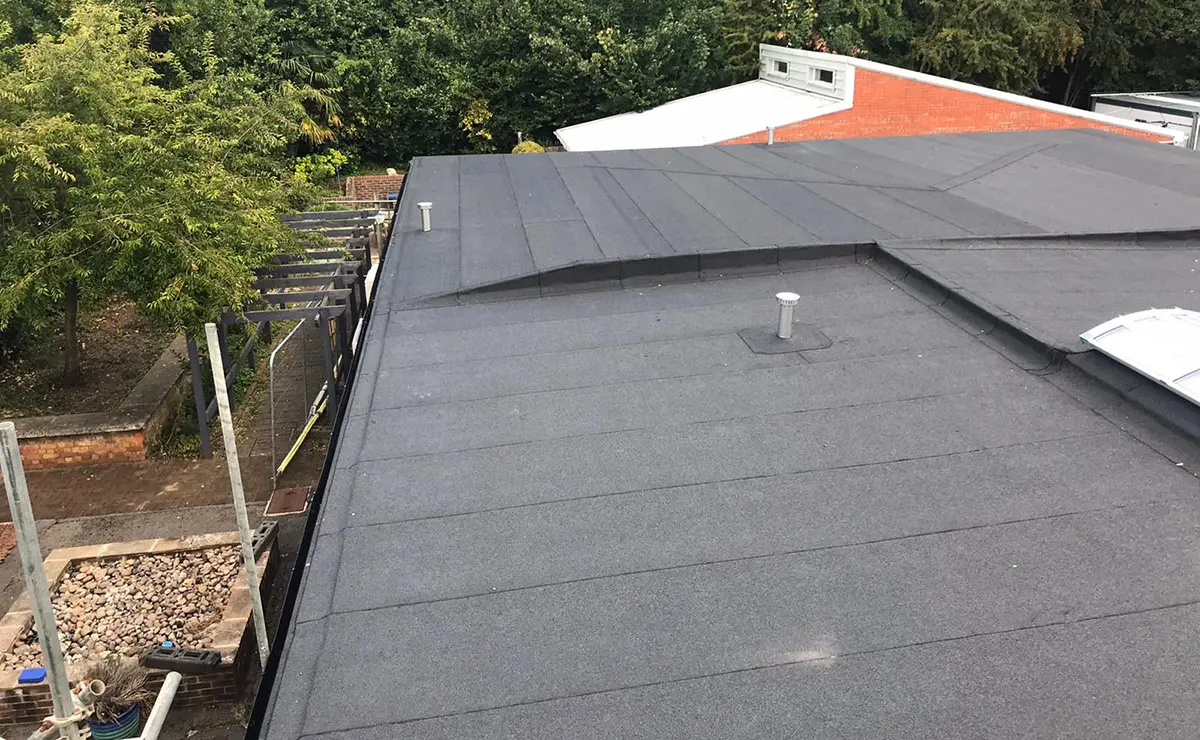
It’s installed in multiple plies, often using torch-down, cold adhesives, or self-adhered sheets.
Pros
Tough and highly puncture-resistant
Great for roofs with heavy foot traffic
Excellent durability for older structures
Cons
Heavier installation
Asphalt layers can dry out over time
Seams may still become weak points
Best For
Small to mid-size commercial buildings, retail spaces, and structures needing layered durability.
Roof Coatings (Silicone, Acrylic, Elastomeric)
Coatings serve as an economical way to restore and extend the life of existing flat roofs. They create a seamless, waterproof membrane that protects against UV rays, ponding water, and leaks.
Coatings are ideal when a building’s roof is worn but not structurally compromised.
Pros
Adds 10–15 years of roof life
Lower cost compared to replacement
Seamless and waterproof
Highly reflective options improve energy efficiency
Cons
Cannot fix structural or insulation damage
Requires deep cleaning and preparation
Not suitable for roofs that are already failing
Best For
Commercial roof restoration projects where the main structure is still solid.
How Northeast Indiana Weather Impacts Flat Roofs
Indiana’s climate is one of the most damaging in the Midwest for flat roofs. Heavy snowfall adds weight and stress to roof structures, while freeze–thaw cycles repeatedly force materials to expand and contract.
Summer adds a different type of stress. High humidity can trap moisture under membranes, while UV exposure accelerates wear and oxidation. A roof in Indiana must withstand both extreme cold and intense heat, making proper installation essential.
These weather patterns make routine inspections more important here than in milder regions.
Lifespan Expectations in Indiana Conditions
With proper installation and consistent maintenance, commercial flat roofs in Indiana typically last:
EPDM: 20–30 years
TPO: 15–25 years
PVC: 20–30 years
Modified Bitumen: 15–20 years
Silicone Coating: 10–15 years
Local conditions such as rooftop traffic, nearby trees, industrial pollution, or ponding water can influence these ranges significantly.
Cost Ranges for Flat Commercial Roofing
Prices vary based on building size, tear-off requirements, insulation needs, and installation complexity. Typical Indiana price ranges include:
EPDM: $5.00–$9.00 per sq. ft.
TPO: $5.50–$10.00 per sq. ft.
PVC: $7.00–$12.00 per sq. ft.
Modified Bitumen: $4.50–$8.50 per sq. ft.
Silicone Coatings: $2.50–$5.00 per sq. ft.
Additional Cost Factors
Tear-off vs. overlay
Tapered insulation for proper drainage
Flashing and edge metal
Wet insulation removal
Commercial permitting and inspections
Accurate cost estimates require a professional roof assessment.
Maintenance and Inspection Timeline
Flat roofs require routine care to avoid premature failure. A consistent maintenance schedule keeps small issues from becoming expensive repairs.
A roof in Northeast Indiana should be inspected:
Every spring after snow and ice
Every fall before freezing temperatures return
After severe storms or high winds
During an inspection, contractors look for punctures, seam failures, blocked drains, flashing separation, and damage caused by rooftop equipment.
Regular maintenance can easily extend a roof’s life by 10 years or more.
Common Flat Roof Problems in Northeast Indiana
Some issues appear more frequently due to the region’s weather patterns:
Ponding water
Shrinkage in older membranes
UV cracking or heat-related aging
Flashing gaps or failures
Blocked scuppers or drains
Recurring leaks around HVAC units
Wet or saturated insulation
Many of these problems begin small and worsen rapidly without intervention.
When to Repair vs. When to Replace
Repairs make sense when damage is localized—such as a seam lifting, a small puncture, or flashing pulling away from one edge. Most issues caught early can be handled without replacing the entire roof.
Replacement becomes necessary when:
Insulation is saturated
The membrane is at the end of its life
Major cracking or blistering is present
Leaks continue after repeated repairs
The roof has structural concerns
Coatings are often a smart in-between option if the roof is aging but still structurally sound.
Understanding Drainage Systems
Drainage is one of the most important elements of a commercial flat roof. Even the best membrane will fail early if water sits on the surface for too long.
Common drainage methods include:
Internal drains (best for large roofs)
Scuppers (simple wall openings)
Gutters (common on smaller commercial buildings)
Standing water for more than 48 hours is a sign that drainage adjustments may be needed.
Conclusion
Commercial flat roofing in Northeast Indiana requires materials and installation methods capable of handling severe weather and heavy seasonal demands. By understanding the strengths and limitations of each roofing system—and following a consistent maintenance schedule—property owners can significantly extend the lifespan of their roof and reduce long-term expenses.
This guide establishes the foundation for all future flat roofing topics, from drainage and insulation to coatings, repairs, and leak prevention. Whether you're managing a new construction project or evaluating an older roof, the insights here will help you make informed decisions that protect your building for years to come.
Featured Posts